Understanding Potential Health Risks Living Near a Landfill
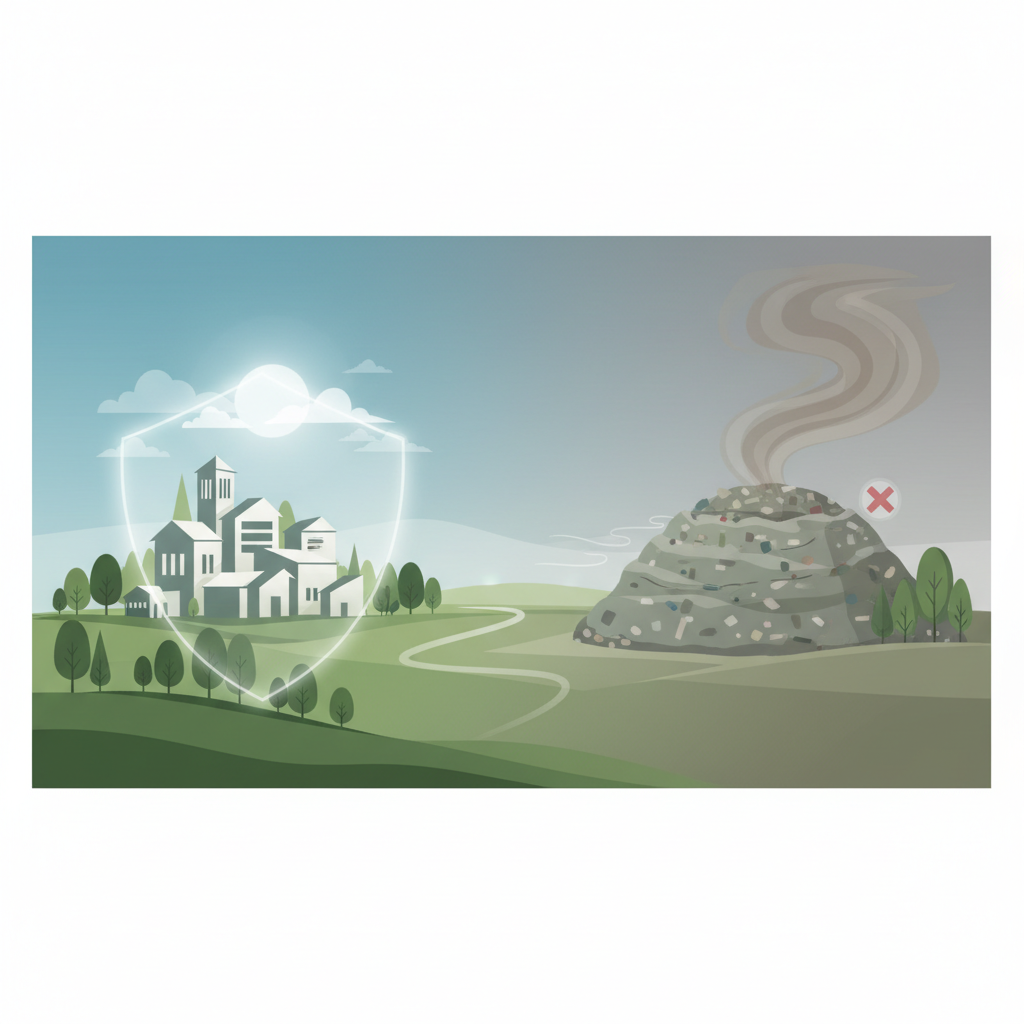
Before you can really dig into potential health concerns, it helps to understand what a landfill actually is and why having one nearby might turn heads. Essentially, a municipal solid waste (MSW) landfill is just a designated spot for all our trash and other non-hazardous waste. Modern ones are pretty sophisticated, designed with liners and systems to collect the nasty liquid that drains out, all aimed at cutting down their environmental footprint. But even with these advancements, decomposing waste still cooks up byproducts that can interact with the environment around them. Knowing what's in your neighborhood really matters. While most homes aren't sitting right next to an active landfill, even a bit of distance can spark questions for homebuyers thinking about their long-term investment, not to mention their family's well-being. Think about it: roughly half the U.S. population lives within about 15 miles of the landfill that takes their trash (U.S. EPA, 2016). This close proximity often leads people to wonder, understandably: Is it really safe to live near a landfill?
Understanding Potential Emissions: Gases, Odors, and Leachate
The biggest worries about living near a landfill usually boil down to what might be seeping into the air, soil, and water. We're talking about gases, odors, and that liquid called leachate. It's worth noting that how much of these you'll find, and how concentrated they are, really depends on the landfill's age, how it was built, and what kind of trash it's holding. For anything property-specific, always chat with a pro. Landfill Gas (LFG): This is just a natural result of waste breaking down, mostly methane (CH₄) and carbon dioxide (CO₂), plus tiny bits of other organic compounds like benzene, toluene, and vinyl chloride (ATSDR, 2001). Methane, by the way, is a seriously potent greenhouse gas and can even be an explosion risk if it builds up enough. Some of those other organic compounds are known to cause cancer or irritation. Studies have shown that LFG levels drop quite a bit as you get further from the landfill—like, significantly within 500 meters (Vojinović et al., 2011). Odors: Landfills can kick up some pretty foul smells. That's thanks to all the organic stuff decomposing and sulfur compounds like hydrogen sulfide (H₂S getting released. While a bad smell is mostly just annoying, constant exposure to really strong odors can actually lead to stress, headaches, nausea, and even mess with your breathing (Portnov & Felsenstein, 2005). These odors can travel several kilometers from a landfill, depending on the wind and the landscape. Leachate: This is the messy liquid that forms when rainwater trickles through trash, picking up all sorts of soluble compounds along the way. Leachate is a cocktail of organic and inorganic pollutants, including heavy metals, ammonia, volatile organic compounds (VOCs), and even some nasty pathogens (Renou et al., 2008). While today's landfills typically have liners and collection systems to prevent groundwater contamination, older landfills or systems that fail could mean leachate seeping into the soil and groundwater. That could potentially mess with local drinking water or soil quality. For instance, researchers in Taiwan once found higher-than-normal levels of heavy metals in soil and crops near a landfill because of leachate leaks (Chen et al., 2004).
Health Implications and Research: A Complex Picture
When you're trying to figure out potential health impacts, stick with official, peer-reviewed information from trusted sources. Researchers from health and environmental agencies worldwide have been studying folks who live near landfills for decades. Their findings painting a nuanced picture, often highlighting statistical connections rather than ironclad cause-and-effect. For example, some research has hinted at slightly higher rates of certain health issues in people living closer to these sites. A 2001 review by the Agency for Toxic Substances and Disease Registry (ATSDR) on landfill gas, for instance, noted studies pointing to possible ties with breathing problems, specific cancers, and problems with childbirth. But they also pointed out how tough it is to definitively link these issues solely to landfill emissions because so many other factors are in play. To get a bit more specific: Respiratory Issues: A big review of studies in Environmental Science and Pollution Research (Porta et al., 2009) found a small but consistent uptick in breathing symptoms—like asthma and bronchitis—among people living within 2-5 kilometers of landfills. They figured this might be due to airborne pollutants, things like particulate matter and volatile organic compounds (VOCs). Birth Defects and Adverse Birth Outcomes: Several studies, including one from the UK (Elliott et al., 2001), have shown slight increases in certain birth defects (think spina bifida) and lower birth weights in babies born to mothers living near landfills, especially within a 2-kilometer radius. But these links are often pretty small and tricky to separate from things like socioeconomic status, a mother's overall health, and other environmental exposures. Cancer Risks: While some broader studies have tried to connect living near landfills with cancer rates, the evidence is still largely not conclusive. Or, it suggests really tiny increases in risk for certain cancers, which are hard to pin solely on landfill emissions (Vojinović et al., 2011). To really get solid answers here, we'd need more big, long-term studies that follow individuals and track their exposure levels. The real challenge is trying to isolate the landfill's effect from a whole bunch of other environmental factors—like industrial pollution, traffic, or even whether an area is affluent or not—all of which can affect health. As a report from the National Academies suggests (2009), we need stronger, longer-term studies and better ways to measure exposure to really nail down definitive conclusions. For a homebuyer, what truly matters is getting the context, not just a bunch of isolated data points. An environmental screening tool can definitely help bridge that gap.
Beyond Emissions: Quality of Life and Property Value
Living near a landfill isn’t just about what's in the air or water. Other factors, while not necessarily direct health risks, can definitely ding your quality of life and even your property value. They're all part of getting the full picture of an environmental profile. Odors: Like we mentioned, constant foul smells can really drag down daily life. They can mess with outdoor activities and even your sleep. Research by Portnov & Felsenstein (2005) points out that bad odors are a top complaint for people living near landfills. Noise: Landfills are busy places. Think heavy machinery, constant truck traffic, and maybe even loud waste compactors. All this can create noise pollution that absolutely ruins the peace and quiet for nearby neighborhoods. Pest Infestation: Landfills are basically a buffet for scavengers. Rodents, birds, and insects can flock there, then become a nuisance or even carry diseases into surrounding areas. Property Value: Studies on home values near landfills offer a mixed bag of results, but generally, they show a negative hit, especially for properties super close by. A study by Ready and McCann (2001) in Land Economics found that being near a landfill decreases single-family home prices, with the biggest impact within a 2-mile radius. This 'stigma effect' can stick around even if the landfill is doing a great job controlling emissions.
Empowering Home Buyers with Environmental Screening
So, how do you, as a homebuyer, get the lowdown on potential health risks of living near a landfill without getting lost in scientific jargon or freaking out over scare stories? The secret is a smart approach and making sure you do your homework. Here’s the thing: most banks and real estate transactions don't automatically include a detailed environmental screening. That means it’s usually on you to uncover these details. While a full-blown Phase I Environmental Site Assessment (ESA) is typically for commercial properties with big legal requirements, everyday homebuyers can still get a lot of value from a simpler screening tool. Imagine this: most homebuyers tick off inspections, appraisals, and title searches but skip the environmental check. That's a huge gap. Knowing if a landfill, or any other kind of facility, is nearby and what its public record says about it helps you ask smart questions and brings in professionals if something looks concerning. Vrnl offers an environmental screening platform built precisely for this. We pull together data from trusted sources like the EPA, FEMA, and NOAA to give you an environmental snapshot for practically any U.S. address. That means you can see, based on publicly available data, if a landfill is close by, what type it is, and if there are any reported compliance issues or cleanup efforts. It gives you context, not just raw facts, so you can make confident choices without unnecessary stress. Now, our platform isn't meant to replace a Phase I ESA or the expertise of environmental consultants. Instead, it’s a super helpful first step for your due diligence. It gives you the awareness you need to move forward with confidence. Finding no sites based on the available data is just as valuable as spotting potential concerns. Either way, you get peace of mind from knowing what’s out there. Buying a home is a deeply personal decision, and keeping your family healthy and your investment safe is top priority. Understanding the potential health risks of living near a landfill—including specific emissions and documented associations—is a totally valid and important part of your journey. By using accessible environmental screening tools and focusing on awareness rather than alarm, you can gain valuable insights into your prospective home's environmental surroundings. This empowers you to make informed decisions and bring in relevant experts if anything needs a closer look. Take charge of your home search and explore your property’s environmental profile. Ready to see what’s nearby?
References: [1] U.S. Environmental Protection Agency (2016). Advancing Sustainable Materials Management: 2016 Fact Sheet. [2] Agency for Toxic Substances and Disease Registry (ATSDR) (2001). Public Health Assessment Guidance Manual (Update). U.S. Department of Health and Human Services. [3] Vojinović, B., et al. (2011). Health effects of living near municipal solid waste landfills: a systematic review. International Journal of Occupational Medicine and Environmental Health, 24(2), 118-131. [4] Portnov, B. A., & Felsenstein, D. (2005). The impact of a landfill on the perception and preferences of local residents. Waste Management & Research, 23(3), 229-236. [5] Renou, S., et al. (2008). Landfill leachate treatment: Review and opportunity. Journal of Hazardous Materials, 150(3), 468-493. [6] Chen, P. H., et al. (2004). Heavy metal contamination in soils and plants near a municipal solid waste landfill in Taiwan. Chemosphere, 54(1), 101-107. [7] Porta, D., et al. (2009). Lung function in residents living near landfills: a meta-analysis. Environmental Science and Pollution Research, 16(5), 551-558. [8] Elliott, P., et al. (2021). Risk of Adverse Birth Outcomes in Populations Living Near Landfills. NHS England, Department of Health. [9] National Academies of Sciences, Engineering, and Medicine (2009). Waste Management: Examining the Impact on Health. The National Academies Press. [10] Ready, R. C., & McCann, L. M. (2001). The Impact of a New Landfill on Residential Property Values. Land Economics, 77(3), 421-435.
Frequently Asked Questions
This article was created with AI assistance and human editorial review for educational purposes only. It is not environmental, legal, medical, or real estate advice and does not constitute a Vrnl environmental report. For property-specific information, consider a Vrnl screening report or consult appropriate professionals. Read full disclaimer.