Is Living Near an Airport Bad For Child Health? What Homebuyers Should Know
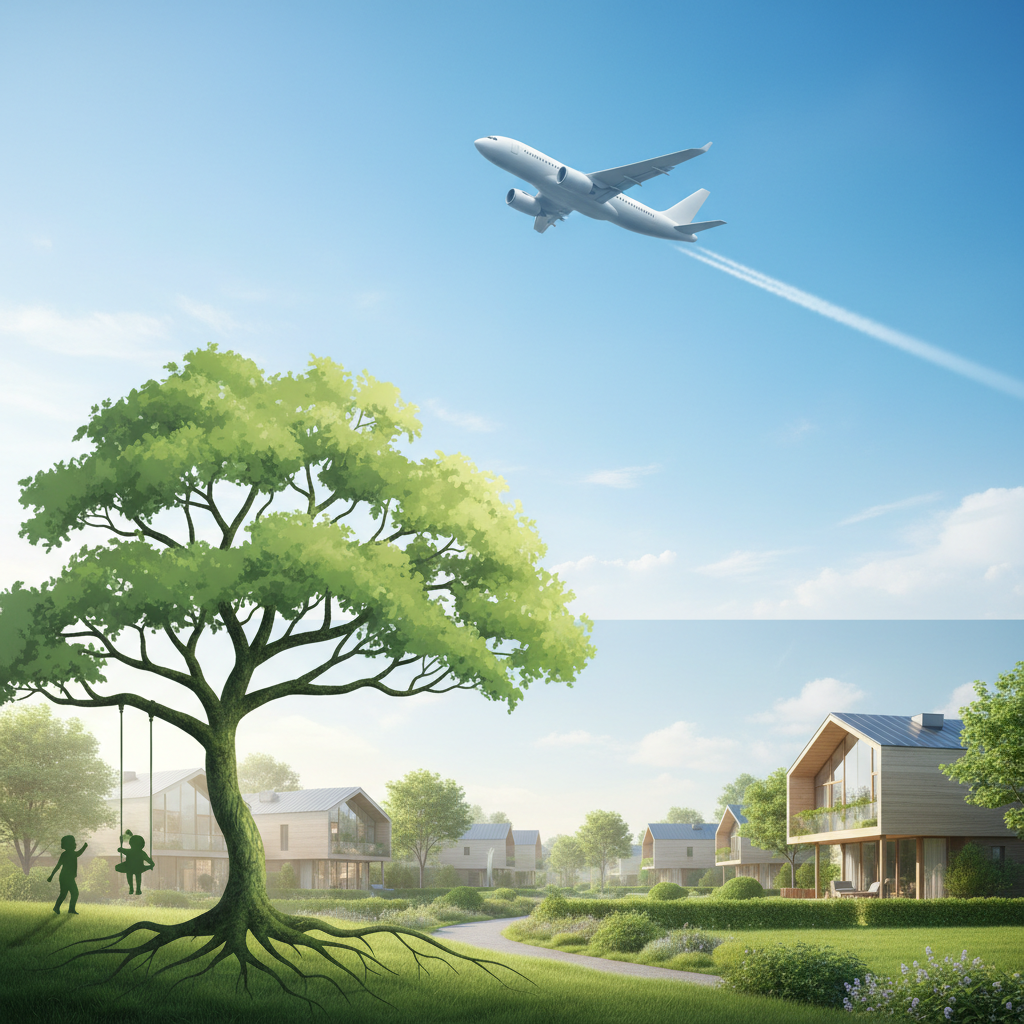
When you're thinking about buying a home, especially if it's near an airport, it's really important to get a handle on all the potential environmental factors. We often focus on the usual home inspection and appraisal, but things like noise, air quality, and even light pollution can seriously affect how livable a property is and, more importantly, the long-term well-being of your family, particularly if you have kids. It's not about being scared; it's about being aware so you can make and informed decision.
The Airport Effect: Beyond Just Noise
Most people, when they hear "near an airport," immediately think about the noise. And honestly, they're not wrong. Constant aircraft noise is a well-known issue, and its impact can go way beyond just being a little annoying—especially for growing kids. Turns out, research from Environmental Health Perspectives points out that kids exposed to chronic aircraft noise can suffer from 'sleep disturbance, annoyance, impaired cognitive performance, and adverse cardiovascular effects' [1]. But here's the thing: this "airport effect" isn't just about what you hear. It also brings up serious questions about air quality and light pollution. Understanding these bigger factors gives you a real-world context for your home research, not just a pile of data. Now, let's talk air quality. Airports are actually big sources of various pollutants, like ultrafine particulate matter (UFP), nitrogen oxides (NOx), and volatile organic compounds (VOCs). A few studies, including one in Particle and Fibre Toxicology, have found noticeably higher concentrations of these pollutants right around airports [2]. This is particularly concerning for children, whose respiratory and neurological systems are still very much in development. The American Academy of Pediatrics has been pretty clear about how vulnerable kids are to air pollution, linking it to higher risks of asthma, reduced lung function, and even neurodevelopmental issues [3]. And specifically for child development, ongoing exposure to air pollutants from traffic (which often includes airport emissions) has been tied to increased risks of developmental delays and behavioral problems [4]. Then there's light pollution, which is often overlooked. Think about the bright, constant glow from airport operations—the runways, the maintenance areas, all those ancillary facilities. That kind of light can really mess with our natural light-dark cycles. For kids especially, this disruption can interfere with sleep patterns, which in turn might impact hormonal regulation and overall well-being [5]. While we're still learning about the direct impacts of airport-specific light pollution on child development, the broader understanding of how light affects our circadian rhythms and sleep is pretty well-established.
Why Environmental Screening is Crucial
Look, most homebuyers are diligent. They get the inspection, the appraisal, the title search. But what many don't realize they're often skipping is a thorough environmental screening. This crucial step is exactly what could uncover potential red flags, like those associated with living near an airport. Why leave such vital details up to chance, or worse, to hours of scattered Google searches? The truth is, environmental data is spread across dozens of federal and state databases. Even trying to piece together a picture on your own is incredibly time-consuming and, frankly, overwhelming. That's where Vrnl comes in. It pulls all that information into one clear, concise report, giving homebuyers the context they need to understand a property's unique environmental story. This approach helps you get a clearer picture of your specific address, cutting through the generalized information out there, and letting you make informed decisions without a ton of unnecessary stress. You might discover interesting details, like a historical landfill site three miles away designated as a Brownfield for redevelopment, or a Superfund site 1.5 miles out undergoing remediation—details that rarely get disclosed. What really matters is understanding what's nearby. A screening tool like Vrnl's environmental profile helps you consolidate information from authoritative sources like the EPA, FEMA, and NOAA, giving you a tangible report you can actually review. Just to be clear, this isn't a Replacement for a Phase I Environmental Site Assessment; instead, it's a detailed, accessible screening tool designed specifically for residential buyers who want to be aware of all the local environmental factors. For example, you can see if the property is within a designated FEMA flood zone, or if there's an active mine nearby, which is a surprisingly common issue in some parts of the country.
Informed Decisions, Not Fear
The whole point of exploring these potential factors isn't to scare anyone away from owning a home near an airport. It's simply to arm you with information. Every single property has its own unique environmental storyline. For some people, the benefits of airport proximity—maybe it's a shorter commute for a pilot, or the convenience of frequent travel—might easily outweigh any potential concerns, especially if there are good mitigation strategies in place. For others, seeing the data might prompt them to adjust their search radius to a different neighborhood. Think of it like putting together a puzzle. Vrnl provides a really important piece by offering an environmental screening. You then combine this with your traditional home inspection, the appraisal, and all your personal priorities to see the complete picture. This comprehensive approach lets you buy with confidence, shedding that nagging feeling of uncertainty. So, is living near an airport unequivocally "bad" for a child's health? The answer isn't a simple yes or no. It's a nuanced consideration that truly boils down to specific environmental factors like noise, air quality, and even light pollution, all of which do have documented impacts on developing children. It just emphasizes how important thorough due diligence is, extending well beyond your typical home inspections. It's also worth noting that many busy suburban areas near airports might also have higher traffic volumes, contributing to similar air quality concerns from vehicle emissions. As you navigate the exciting, yet sometimes overwhelming, journey of finding your next home, an environmental screening tool offers that crucial extra layer of awareness. It's a surprisingly small investment for a significant amount of peace of mind, allowing you to screen virtually any U.S. address and really understand its environmental context. Don't let something unknown today become an unexpected concern later. Take control of your home search, and walk into your purchase with your eyes wide open. Ready to pull back the curtain on the environmental profile of your next potential home? Check out Vrnl's screening options today and make a truly informed decision for your family's future.
References
[1] Stansfeld, S.A., & Clark, C. (2015). Environmental noise exposure and children's health. Environmental Health Perspectives, 123(2), A10-A11. [2] Hudda, N., Simon, M. C., & Sioutas, C. (2014). Spatial and temporal variability of ultrafine particles near a major airport. Particle and Fibre Toxicology, 11(1), 54. [3] American Academy of Pediatrics Council on Environmental Health. (2021). Ambient Air Pollution: Health Hazards to Children. Pediatrics, 148(4), e2021053123. [4] Guxens, M., Ghassabian, A., Gong, T., Garcia-Esteban, R., Porta, D., Chumlea, W. C., ... & SUN-Project. (2014). Air pollution exposure during fetal life, infancy and childhood and cognitive and psychomotor development in children: a systematic review and meta-analysis. European Journal of Epidemiology, 29(7), 441-456. [5] Touitou, Y., Bogdan, A., Claustrat, B., Koga, S., & van Meerwijk, J. (2017). The circadian clock in children: Effects of ambient light. Chronobiology International, 34(7), 896-904.
Frequently Asked Questions
This article was created with AI assistance and human editorial review for educational purposes only. It is not environmental, legal, medical, or real estate advice and does not constitute a Vrnl environmental report. For property-specific information, consider a Vrnl screening report or consult appropriate professionals. Read full disclaimer.