Niche Homebuying: Finding Your Perfect County Based on Specific Environmental Needs
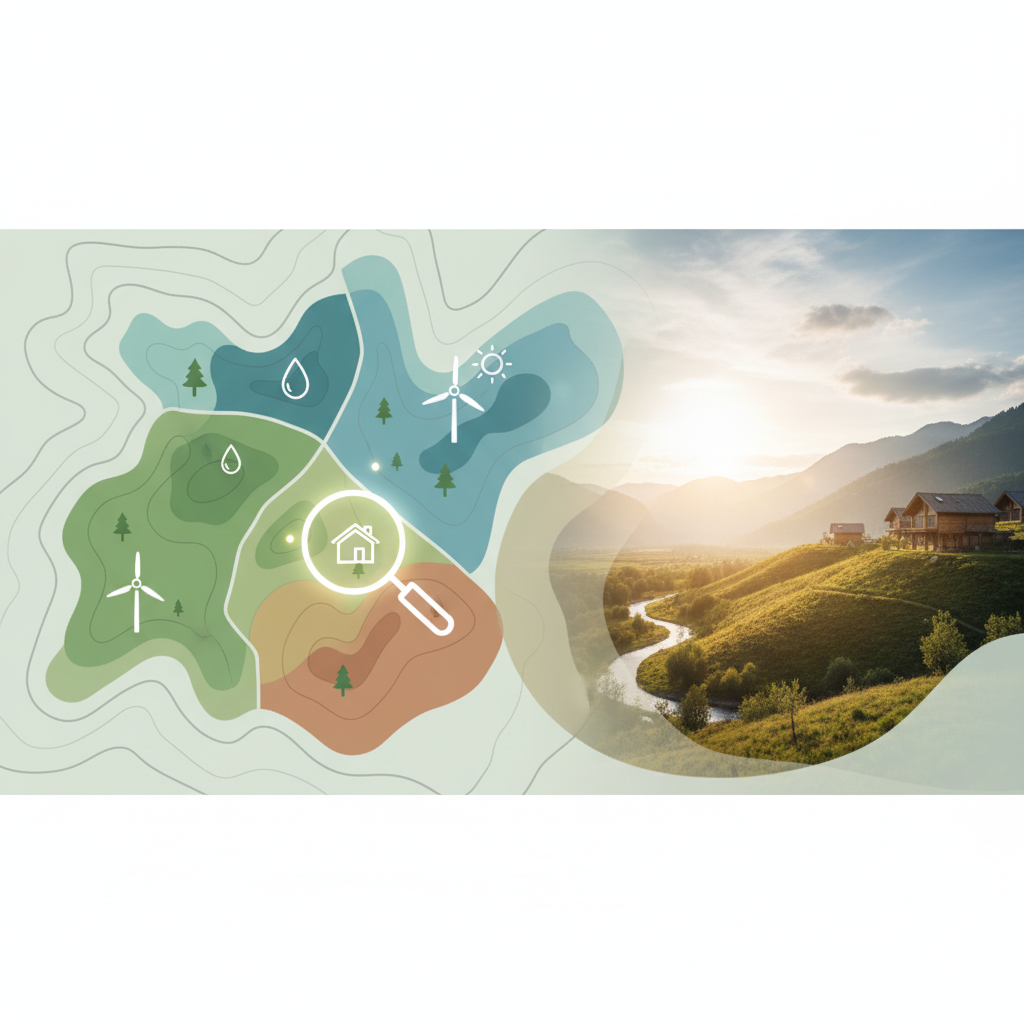
For most homebuyers, finding a new home focuses on things like good schools, an easy commute, and fun local amenities. But what if your priorities run a little deeper? A growing number of people are now putting environmental concerns at the top of their list, sometimes even above those traditional factors. Maybe they want to steer clear of areas with a history of industrial pollution, or perhaps they're chasing crystal-clear water and quiet, dark nights. Pinpointing a county that ticks all these specific environmental boxes demands a more thoughtful approach than just a quick Zillow search. This guide dives into niche homebuying strategies, showing you how to really dig into counties to find one that matches your environmental criteria, ensuring your next move fits your lifestyle and protects your investment.
Understanding Environmental Preferences in Homebuying
Before you even start Googling counties, it's worth taking a moment to really nail down what "environmental needs" actually means for you. We're not just talking about vague preferences here. For instance, some buyers might absolutely refuse to live near a Superfund site, while others are more worried about agricultural runoff fouling up local streams. Getting crystal clear on these specific concerns can really sharpen your focus and make the whole search much more efficient. Most people tend to rely on gut feelings or what they hear from friends about a region's environmental health. But trust me, a closer look at the actual data often tells a much more nuanced story. A county might boast stunning natural beauty, yet still harbor hidden environmental issues that only a thorough investigation can unearth. Knowing your priorities upfront can save you a ton of time and prevent unwelcome surprises down the road.
- Define specific environmental priorities (e.g., water quality, air quality, flood risk, proximity to industrial sites, noise levels).
- Distinguish between general preferences and critical non-negotiables.
- Consider long-term environmental trends rather than just current conditions.
Leveraging Data for County-Specific Environmental Screening
Getting your hands on reliable environmental data is absolutely key for niche homebuying. Federal agencies like the EPA, FEMA, and NOAA gather mountains of information on environmental conditions all over the country. The problem is, this data is often spread out, highly technical, and frankly, a pain for most everyday homebuyers to sort through. Learning how to find and use this data is a huge step in picking the right county. For instance, EPA databases can point to hazardous waste sites, air quality monitoring stations, and even highlight drinking water violations. FEMA offers detailed flood maps—essential for understanding flood risk. And NOAA provides crucial intel on coastal erosion and projections for sea-level rise. Pulling all these diverse data sources together and cross-referencing them for an entire county can be a hugely time-consuming and complex project, often requiring specialized tools.
- EPA data sources for industrial sites, air, and water quality.
- FEMA flood maps and hazard mitigation plans.
- NOAA data for coastal risks and weather patterns.
- MSHA data for historical mining operations.
The Challenge of DIY Environmental Research
A lot of homebuyers try to tackle their own environmental research, painstakingly stitching together bits of information from various government websites. While that DIY spirit is admirable, it usually leads to incomplete or just plain confusing results. There's so much data out there, often packed with technical jargon, and no single place to find it all. It’s hard to get a real handle on things. Frankly, few of us have the time or the expertise to wade through dozens of databases and decipher complex environmental models for every single county we're considering.
- Data is often scattered across multiple agency websites.
- Technical jargon and complex report formats can be difficult to understand.
- Time constraints make thorough DIY research impractical for most buyers.
Comparing Alternatives: NHD Reports vs. Phase I ESAs
When you're trying to get a handle on environmental concerns during homebuying, you'll probably bump into two common tools: Natural Hazard Disclosure (NHD) reports and Phase I Environmental Site Assessments (ESAs). It's crucial to understand what they do and, more importantly, what they don't. NHD reports are legal requirements in some states; they flag natural hazards like flood zones, earthquake faults, and wildfire-prone areas. They're great for understanding natural risks specific to a property. The catch? NHD reports typically don't touch on man-made environmental issues—think hazardous waste sites, industrial contaminants, or local pollution. So, while they offer a good baseline for natural disasters, they leave a huge hole when it comes to other environmental factors. Phase I ESAs, on the other hand, are comprehensive assessments usually done for commercial properties or sites with known contamination. These involve site visits, digging through historical records, and sometimes even testing the soil or water. They're incredibly thorough, but also expensive, slow (we're talking weeks here), and generally overkill for most residential buyers, unless there's a specific, nagging concern that truly warrants such a deep dive. Most home sales don't involve a Phase I ESA, meaning a lot of potential environmental issues simply go unexamined.
- NHD reports cover natural hazards required by state law, not man-made environmental concerns.
- Phase I ESAs are thorough for known contamination, but expensive and too slow for most residential purchases.
- Most residential buyers are left with limited options for comprehensive environmental screening outside of these two extremes.
A More Streamlined Approach: Environmental Screening Platforms
For homebuyers with very specific environmental needs, an environmental screening platform offers a smart middle ground. It sits right between those rather superficial NHD reports and the eye-wateringly expensive Phase I ESAs. These platforms actually pull together data from various government sources, process it all, and then serve it up in an easy-to-understand format for specific property addresses—or even for entire counties. This approach allows most buyers to conduct a pretty comprehensive environmental review without a lot of hassle. An environmental screening platform gives you a clear snapshot of tons of environmental factors that could influence your homebuying decision. We're talking about everything from how close you are to Superfund sites, industrial facilities, and hazardous waste, to historical oil and gas wells, mining operations, and even sources of noise and light pollution. By crunching all this information into one place, buyers get a much clearer picture of a county's overall environmental profile and how well it matches their particular needs. No need to become an environmental data wizard yourself! Most buyers find this kind of service incredibly valuable, especially when they're trying to make informed decisions under tight timelines. Suddenly, comparing environmental conditions across multiple counties isn't a headache; it's a manageable task, moving beyond vague chatter to solid, data-driven insights. For example, if great water quality is your main concern, such a platform can quickly flag local drinking water violations or potential contamination sources near properties within a county. If you're wary of living too close to big industrial zones, the platform can pinpoint their exact locations relative to residential areas. This level of detail, it turns out, is rarely disclosed in standard real estate listings or during typical buyer due diligence.
- Aggregates data from EPA, FEMA, NOAA, MSHA, and other sources.
- Presents complex environmental data in an easy-to-understand format.
- Covers a wide range of categories from industrial sites to water quality to noise pollution.
- Enables efficient comparison of environmental profiles across multiple counties or properties.
Case Study: The Anxious Relocator and Environmental Due Diligence
Imagine a family relocating from a major city for a new job. They have young kids and a history of environmental sensitivities, making clean air and water their top priorities. Their goal is to find a county with minimal industrial activity and a solid track record for safe drinking water, even if it means a slightly longer commute. They initially narrowed their search to three promising counties, based mostly on school districts and what they could afford. But when they tried a quick online search for "industrial sites near me," the results were fragmented and full of baffling technical terms. Hiring an environmental consultant seemed like an option, but the cost and time for a full Phase I ESA on multiple counties was just out of reach. That's when they turned to an environmental screening platform. They used it to generate reports for several properties in each county. The reports immediately flagged potential issues: one county had an unexpectedly high number of historical oil and gas wells, another showed several drinking water violations in specific towns, and a third, while generally clean, had a major power plant on its eastern border. This specific data helped them rank the counties based on environmental fit. Ultimately, they chose a county that, while not their first pick for commute time, offered the environmental profile they so desperately wanted. This systematic approach helped them uncover hidden details that they surely would have missed until after closing. They reported feeling much more confident in their final decision.
Key Environmental Factors Often Overlooked by Homebuyers
Most homebuyers tend to zero in on what's easily visible or commonly discussed. However, several critical environmental factors often remain completely overlooked during the homebuying process, especially when you're sizing up an entire county. Recognizing these can save you from future headaches and ensure your purchase truly aligns with your specific environmental needs. Take historical land use, for example—it's a huge factor but often completely forgotten. A seemingly pristine residential area now might have once been an industrial site, a farm heavily sprayed with pesticides, or even a landfill. The lingering effects of those past uses can stick around in the soil or groundwater long after any visible evidence has vanished. Sellers rarely disclose these kinds of details unless legally compelled, and they usually fall outside the scope of a standard home inspection. Another often-missed factor is the cumulative effect of many smaller environmental concerns. A county might not have a massive Superfund site, but it could be home to numerous small manufacturing plants, dry cleaners, or auto repair shops. Over time, these can contribute to localized contamination or pose ongoing low-level risks. Individual property assessments often completely miss this broader, county-wide environmental character. Truly understanding these nuanced issues really needs a tool that can pull together and interpret a wide range of data. If concerns do pop up, a professional consultation might be a good idea.
- Historical land use (former industrial, agricultural, or waste sites).
- Cumulative impact of smaller, localized pollution sources.
- Proximity to active or historical mining operations.
- Noise and light pollution levels that affect quality of life.
- Long-term climate change impacts like sea-level rise or increased wildfire risk specific to the county.
- Drinking water quality outside of municipal lines, such as private wells.
Understanding Risk Levels and Context
It's important to remember that just because an environmental concern pops up, it doesn't automatically signal immediate danger. Often, environmental reports pinpoint potential issues that simply warrant a closer look. The context around these findings is absolutely critical. For example, a toxic release site a few miles away might have a very different impact than one right next door. Similarly, historical contamination could be stable and contained, posing little current risk, or it could be slowly spreading. Environmental screening tools are truly designed to make you aware, not to make you panic. They highlight areas of potential concern so most homebuyers can ask more informed questions, seek professional assessments if needed, or simply factor the information into their decision-making process. The whole point is to move forward with a complete understanding of a potential new county and property's environmental landscape, rather than stumbling upon issues after you've already closed. Always consult with qualified professionals for specific advice.
- Detection of a concern does not automatically mean danger.
- Distance, type of contaminant, and mitigation efforts are important contextual factors.
- Screening tools provide awareness for informed decision-making, not definitive risk assessments.
- Professional environmental consultants and legal experts should be consulted for in-depth analysis.
Making an Informed Decision: Integrating Environmental Data
Integrating environmental data into your overall homebuying decision is really what separates a casual search from a truly niche homebuying strategy. Once you have a comprehensive environmental profile of potential counties, most homebuyers can comfortably weigh these factors alongside more traditional considerations like school districts, property values, and community vibes. For some, environmental concerns might be absolute deal-breakers, immediately ruling out certain counties or specific areas within them. For others, environmental findings might simply give them leverage in negotiations or prompt them to do further, more targeted investigations, like specific water testing or soil analysis. The key here is to have all that information up front, empowering you to make proactive decisions instead of reacting to problems later. Successful niche homebuying based on environmental needs demands diligence and the right tools. By taking advantage of comprehensive environmental screening, buyers can navigate complex data, uncover hidden concerns, and ultimately find a county and a home that truly aligns with their specific environmental preferences—and protects their investment. This proactive approach really helps avoid expensive surprises and ensures your move supports the quality of life you're seeking.
- Weigh environmental findings alongside traditional homebuying factors.
- Utilize environmental data to inform negotiation, further testing, or property selection.
- Prioritize environmental factors based on personal needs and risk tolerance.
- Recognize that environmental awareness enhances overall due diligence.
Finding that perfect county for niche homebuying, especially when you have specific environmental needs, is a journey that definitely calls for careful thought and access to solid, comprehensive data. It's interesting how most homebuyers often overlook the environmental landscape of a region, choosing instead to focus mainly on what they can see. But for those with particular priorities, truly understanding things like water quality, how close industrial sites are, or a property's historical land use becomes absolutely essential. While those standard NHD reports offer a peek into natural hazards, and Phase I ESAs are for much more intense, site-specific investigations, environmental screening platforms actually fill a crucial gap. They provide easily accessible, aggregated data for a much broader understanding of a county's environmental profile. By using tools like these, homebuyers can confidently pinpoint a location that perfectly matches their unique environmental requirements, making an informed and much more protected investment. Exploring these options and grasping the value of an environmental screening report is a truly valuable step in the entire process.
Frequently Asked Questions
This article was created with AI assistance and human editorial review for educational purposes only. It is not environmental, legal, medical, or real estate advice and does not constitute a Vrnl environmental report. For property-specific information, consider a Vrnl screening report or consult appropriate professionals. Read full disclaimer.